Denis Diderot was broke. Properly broke. So when a wealthy admirer bought his entire book collection for what would now be roughly £200,000, it should have felt like relief. Clean relief. End of problem.
It was not.
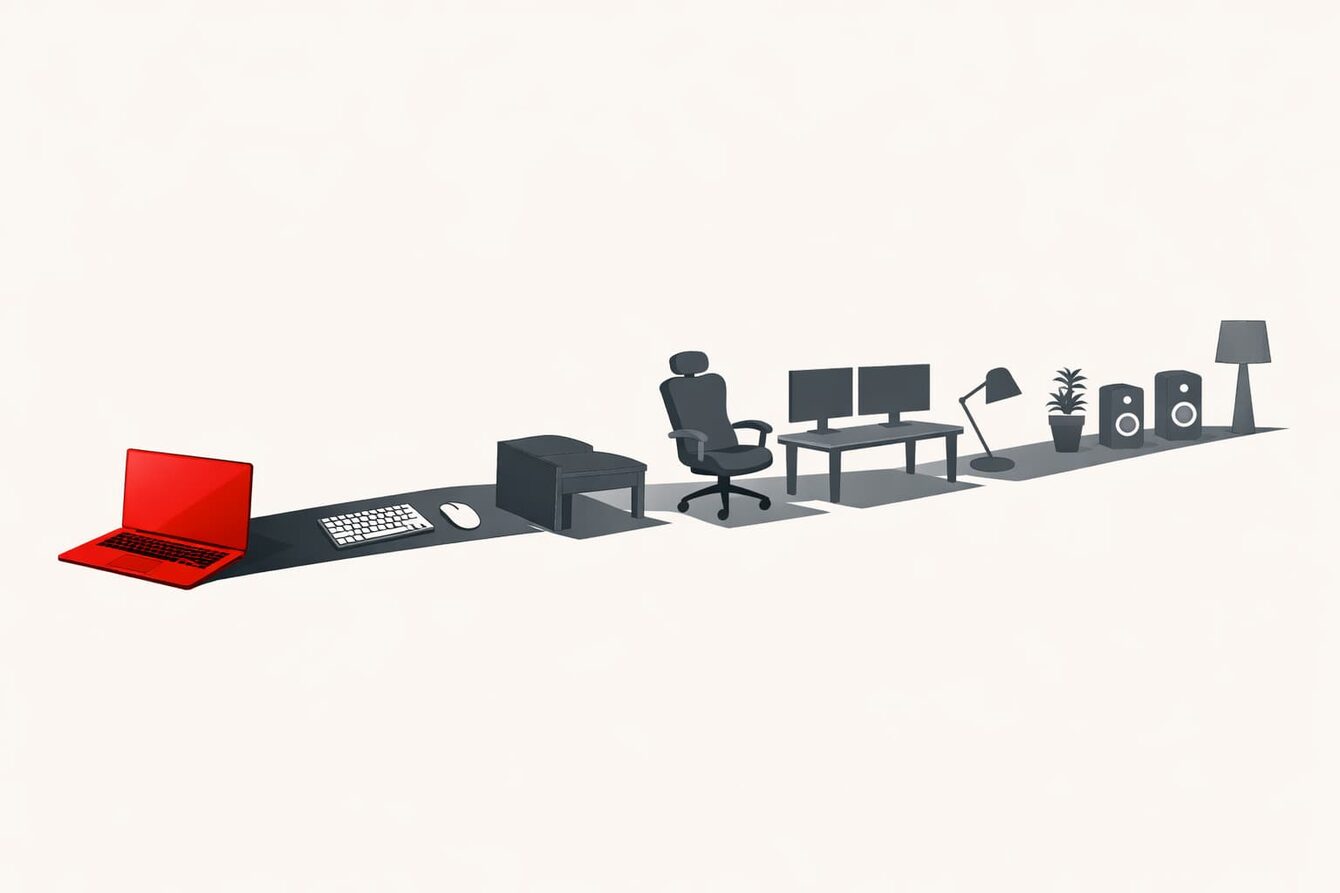
He bought a new dressing gown with the money. That made his old desk look shabby. A new desk made the chairs look wrong. New chairs made the rug feel out of place. One purchase pulled the next one in after it, and then the next, until Diderot found himself surrounded by things he had not planned on buying and a mood he had not planned on feeling.
He wrote about it. The essay is called Regrets on Parting with My Old Dressing Gown. Which is already a warning, frankly.
The concept now has a name: the Diderot Effect. One new thing does not arrive alone. It arrives with a whole implied version of life attached to it. A new benchmark. A new idea of what should fit with what. And once that enters the room, the old setup starts to look slightly embarrassing, even if nothing about it was actually broken.
You buy a new jacket. Now the shoes look off. New shoes, then a new bag. The bag does not suit the car. At some point you are not buying things anymore. You are maintaining an identity that keeps moving half a step ahead of you.
This is different from simply wanting things. The Diderot Effect is about how one purchase quietly redraws what normal looks like, and how quickly you start defending that new normal as if it were inevitable.
A few places this shows up, and where I keep noticing it:
Gadgets. A new laptop makes the keyboard feel inadequate. A new phone exposes which apps were already behind. Each upgrade does not complete the system. It reveals the next weak point.
Fitness. New running shoes become a gym membership, which becomes supplements, which becomes a smartwatch, which becomes a whole minor religion. Each step felt reasonable. None of it was planned.
Productivity tools. This one I know too well. A new note-taking app needs a new system, which needs a new framework, which somehow needs a second app to manage the first one. The original problem, taking better notes, vanishes somewhere in the middle of setting up the solution.
The answer is not really to buy nothing, though that helps more than people like to admit. It is to notice when a purchase is trying to sell you an identity, not just a function.
Diderot did not just buy a dressing gown. He bought, briefly, the idea that he was the kind of man whose dressing gown matched the rest of his life.
He was not. Most of us are not. And the gap between what we have and what the new thing implies we should have, that is where the spiral lives.
Worth knowing it has a name.